




What You'll Need
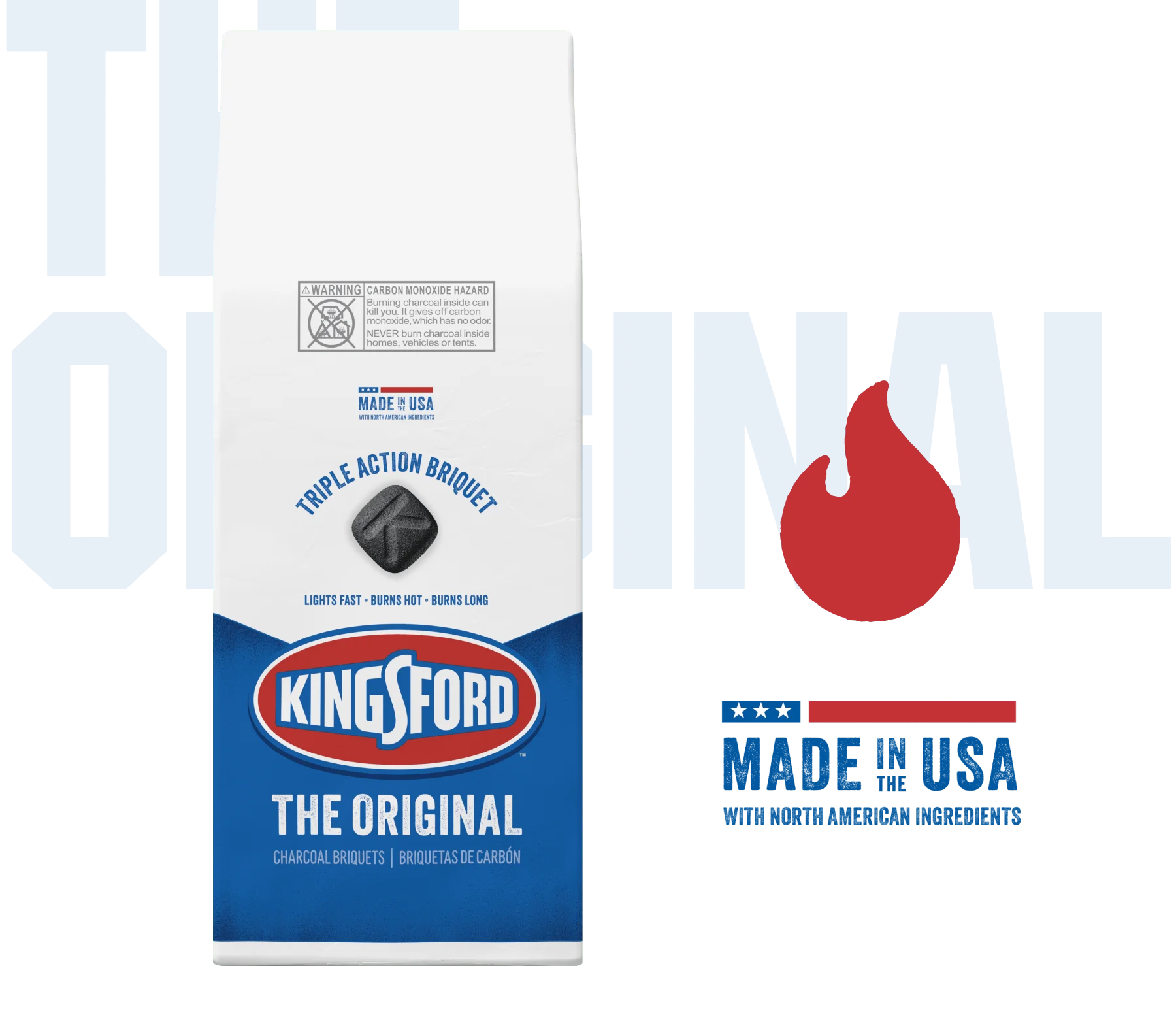
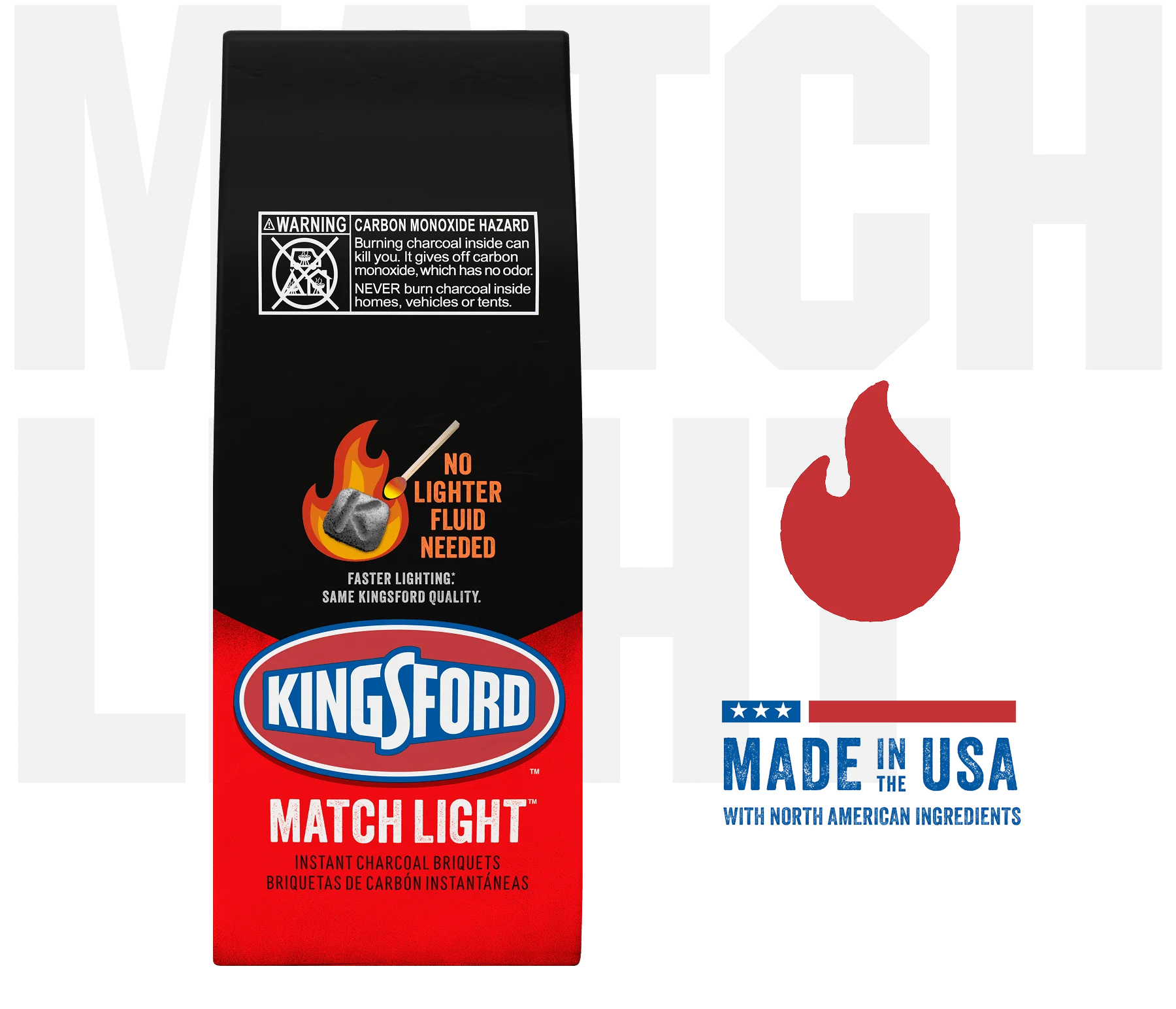
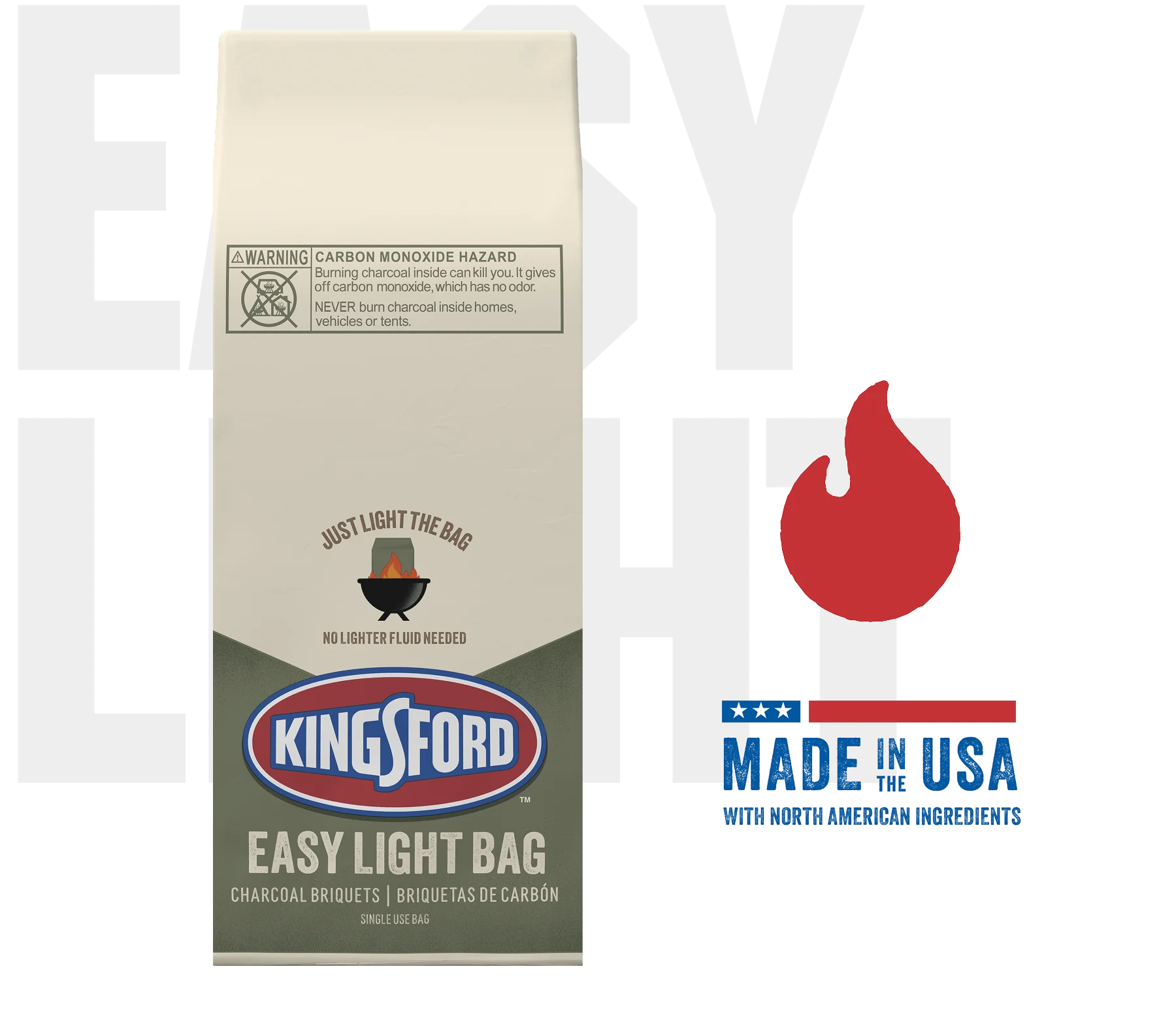
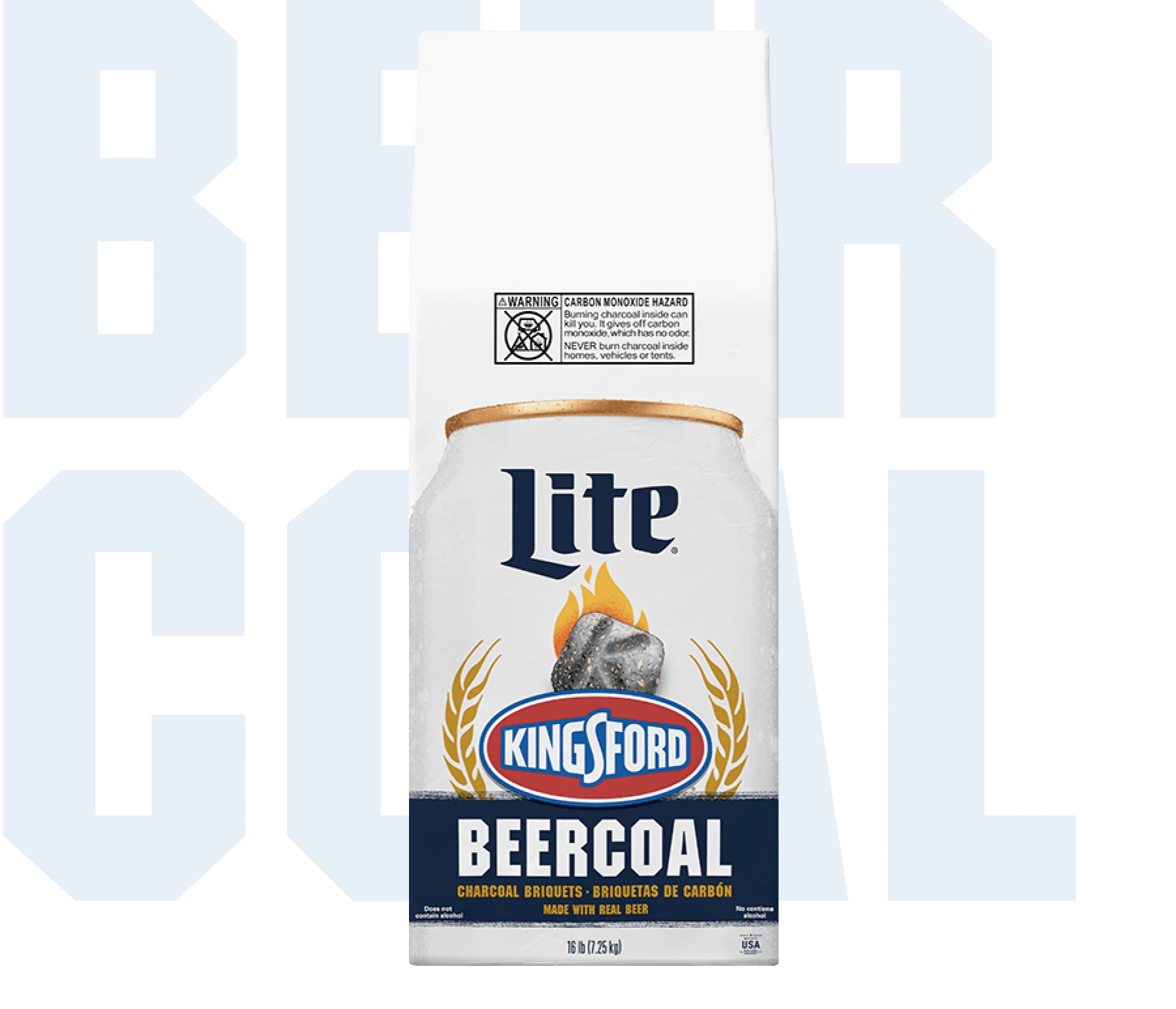
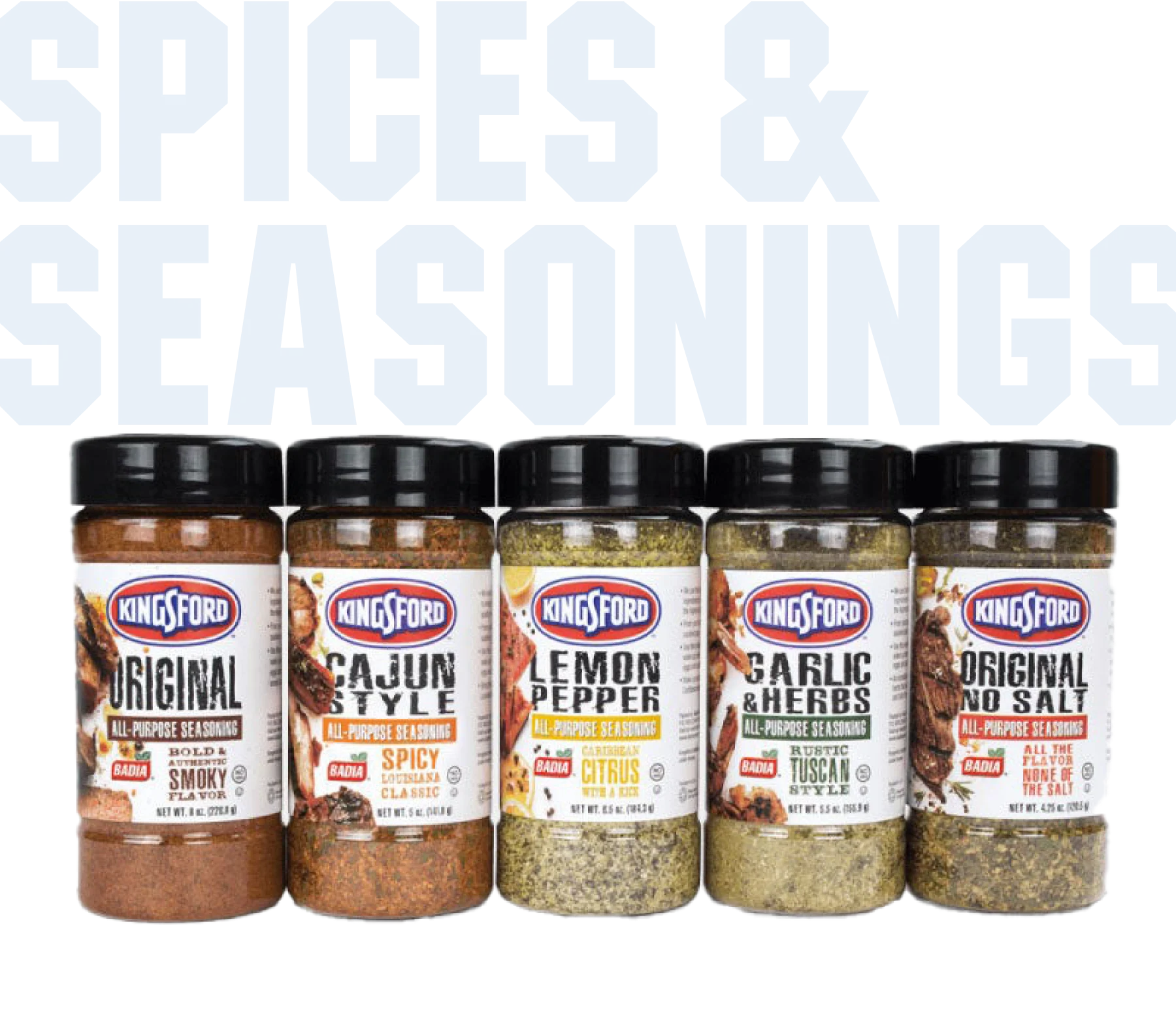
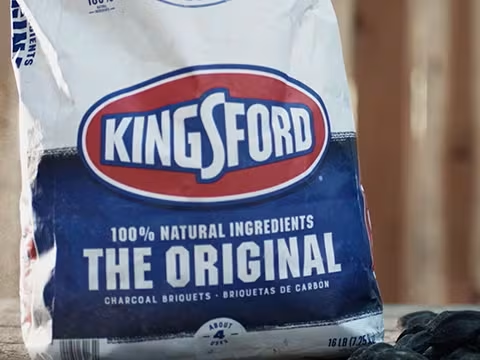
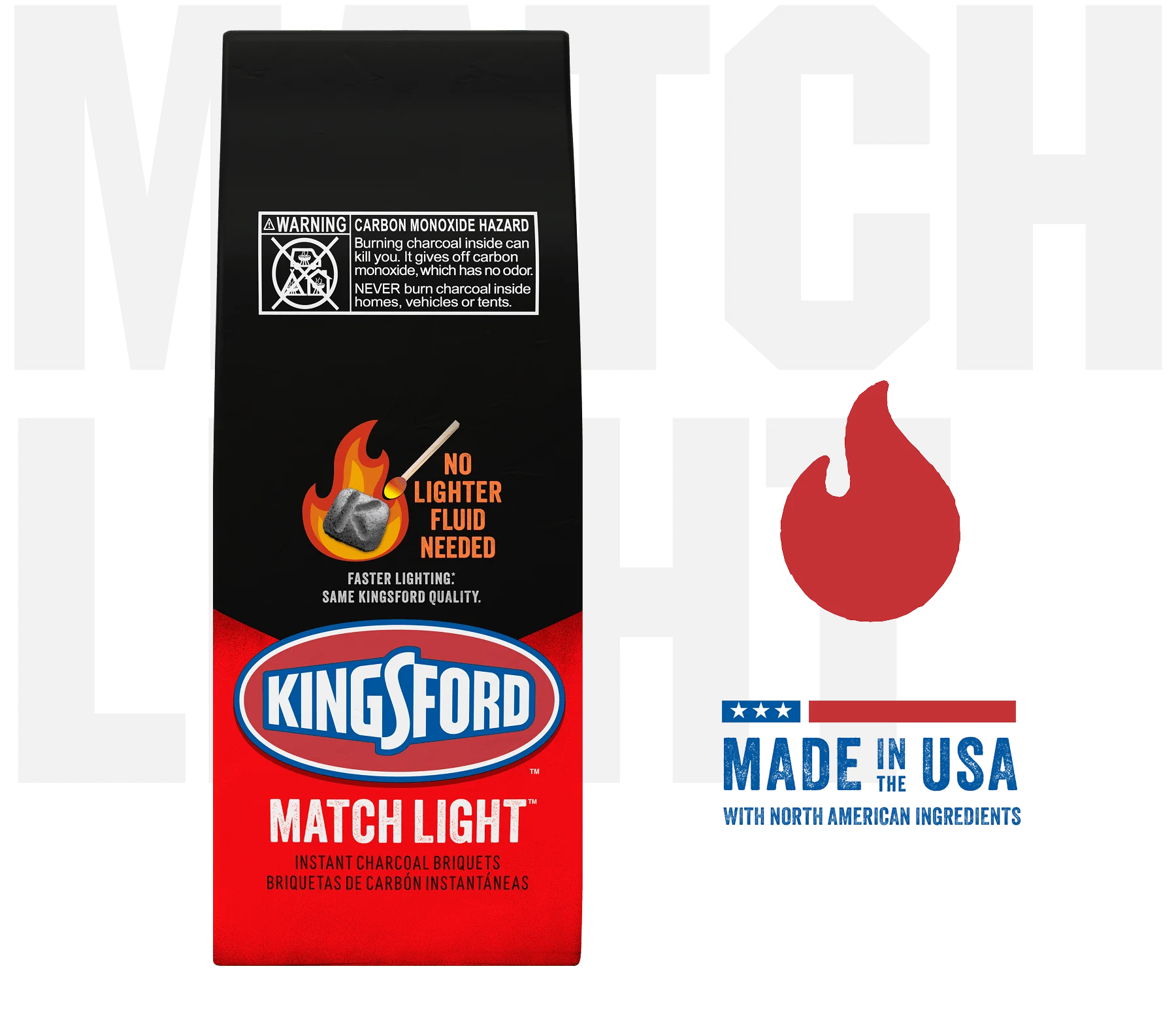
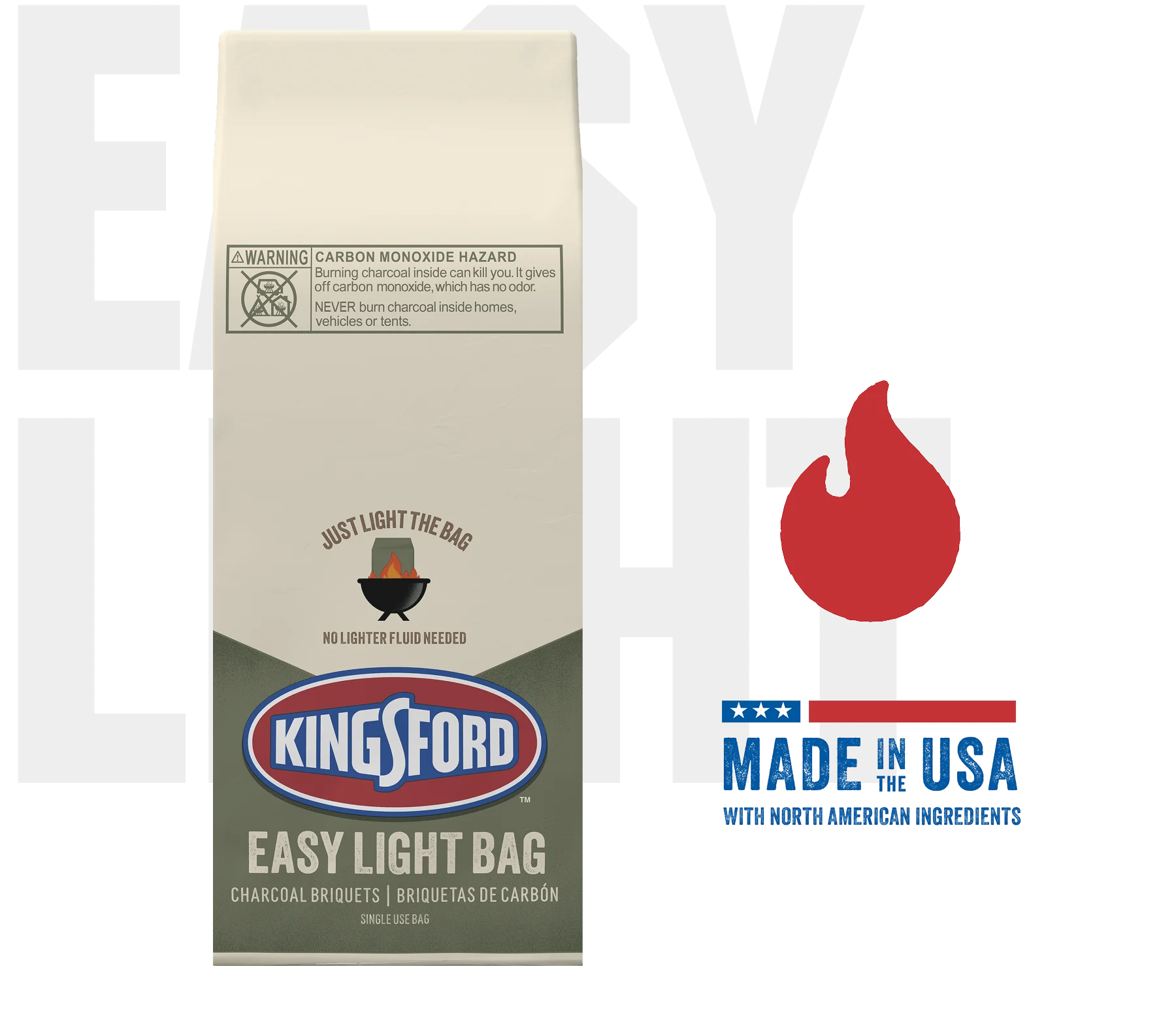
Before starting, make sure you have everything on this list. As always, we recommend Kingsford™ Original Charcoal Briquets.
FUELS AND TOOLS
Grill or Smoker
Grill Thermometer
Drip Pan
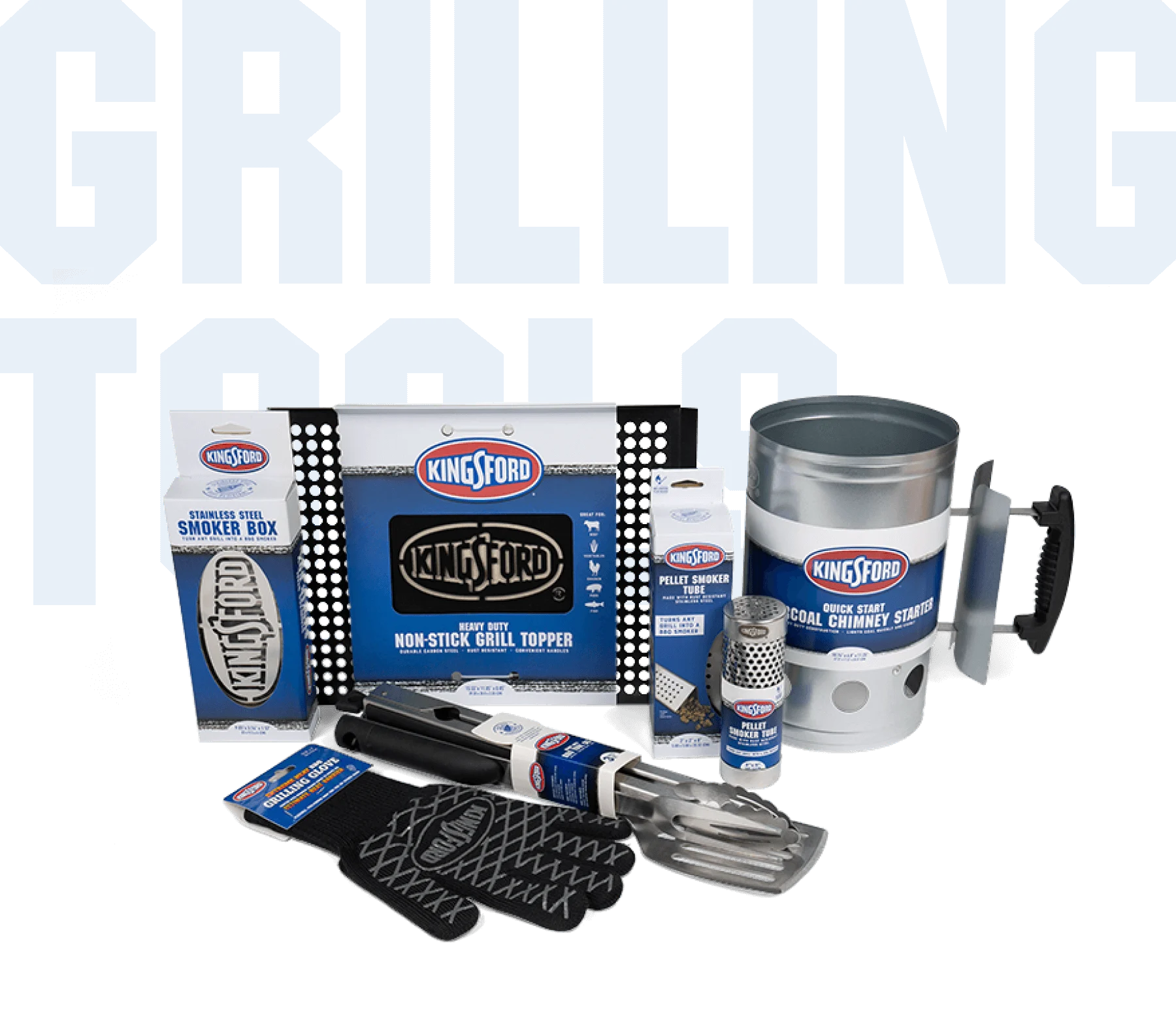
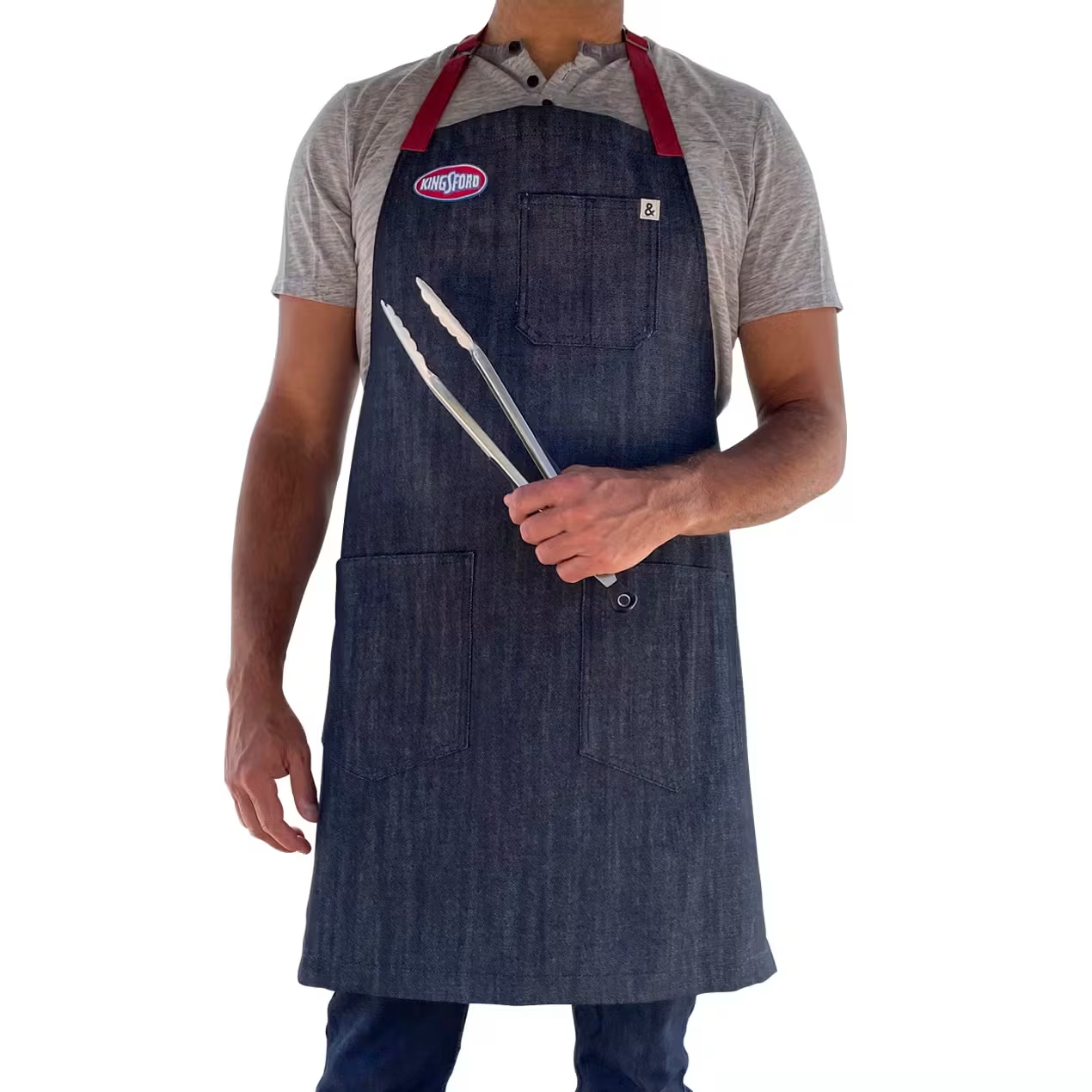
Lang-Handled Tongs or Long-Handled Metal Spatula
Paper Towels
Cloth
Dinner Knife
INGREDIENTS
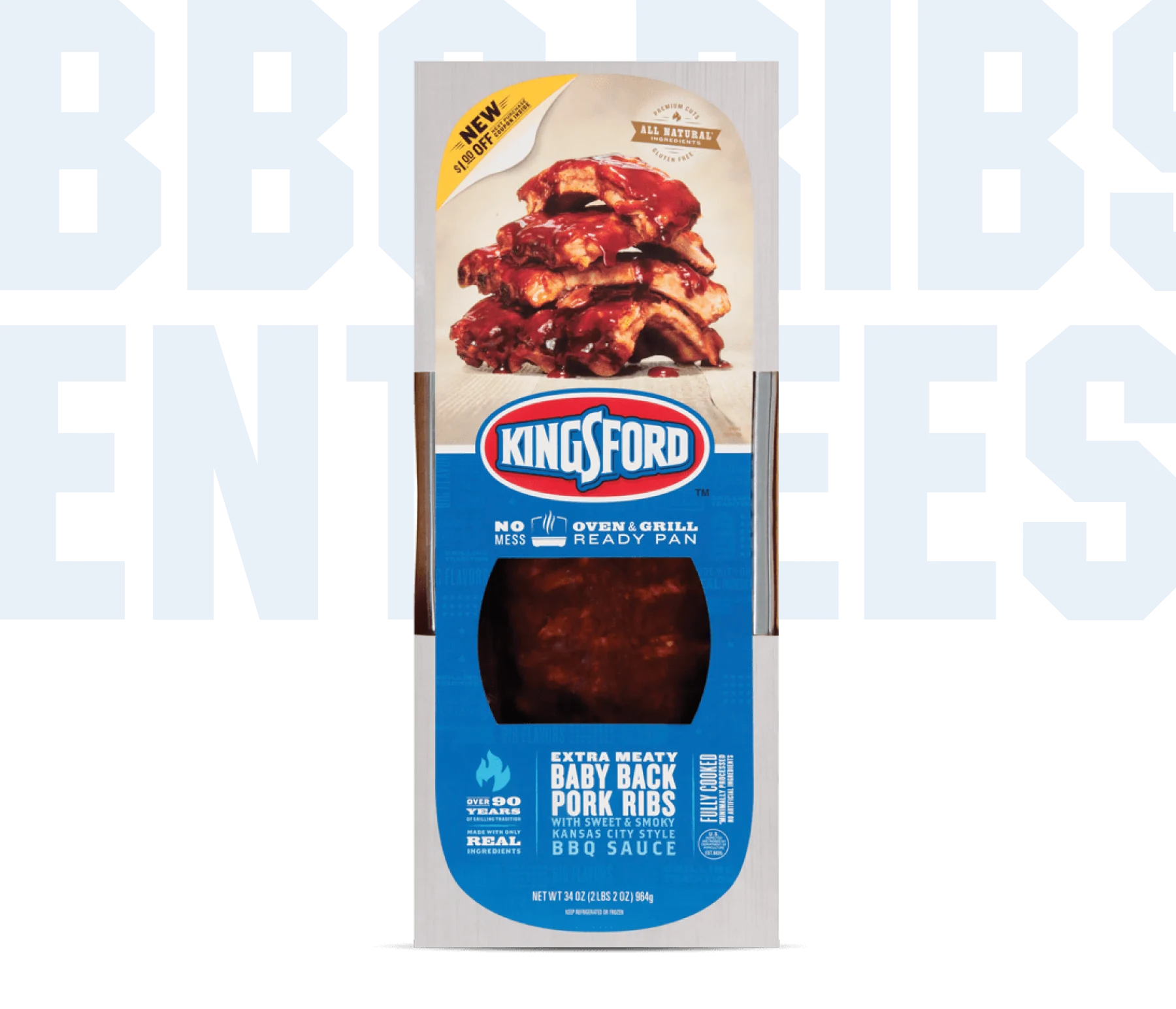
2 Slabs of Ribs (Spare or Baby Back)
2 Tbsp. Dry Rub
Glaze or Sauce (Optional)
Water or Apple Juice

KINGSFORD™ CHARCOAL
Our charcoal has been proudly made in the USA since 1920. Available in a variety of flavors to give you a delicious, smoky taste for any occasion.


How to Prep
How to Prep
Remove ribs from packaging and pat dry to remove excess moisture to achieve the best results.
Allow ribs to come to room temperature (never longer than 2 hours) before grilling to ensure even cooking and flavor.
Using a knife, trim off the excess top fat and remove the membrane, shaping or squaring off the ribs while trimming any flap meat. Leave a 1/4" thick layer of fat to keep the meat moist during the long cooking process.
Season with your favorite dry rub or spice.
Set the rack of ribs on a cutting board or serving tray that's larger than your ribs, and season the bone side of the ribs first.
To get an even coat, sprinkle the seasoning from 12" to 18" above the bones and be sure to cover the bones as evenly as possible, and remember to get the ends or cut sides of the rib rack.
Flip the ribs over and season the meat side generously.
Suggested rubs: Classic BBQ, Memphis Dry, Kansas City, Texas-style, Apple & Honey
Suggested marinades: Classic BBQ, honey garlic, citrus-chipotle, apple cider vinegar, pineapple teriyaki
Suggested injections: Apple juice, apple cider vinegar, pineapple juice, pork broth, maple syrup
Optional: Brine by soaking your pork ribs in a solution of salt, water, and even spices
Preparing the Pork Ribs:
Trimming Pork Ribs:
Seasoning the Pork Ribs:
Add Extra Flavor:

How to Build Your Fire
How to Build Your Fire
Suggested Kingsford™ Charcoal: Looking for a smoky wood flavor? Try Hickory or Mesquite. For a sweeter smoky wood flavor, use Applewood.
For a kettle-type grill, use an indirect technique like The Charcoal Snake.
Backyard smokers should be set up for a Long Smoke.
To help moderate the grill temperature and add moisture, place a drip pan filled with water or apple juice directly under the meat.

How Long to Smoke & Temperature
How Long to Smoke & Temperature
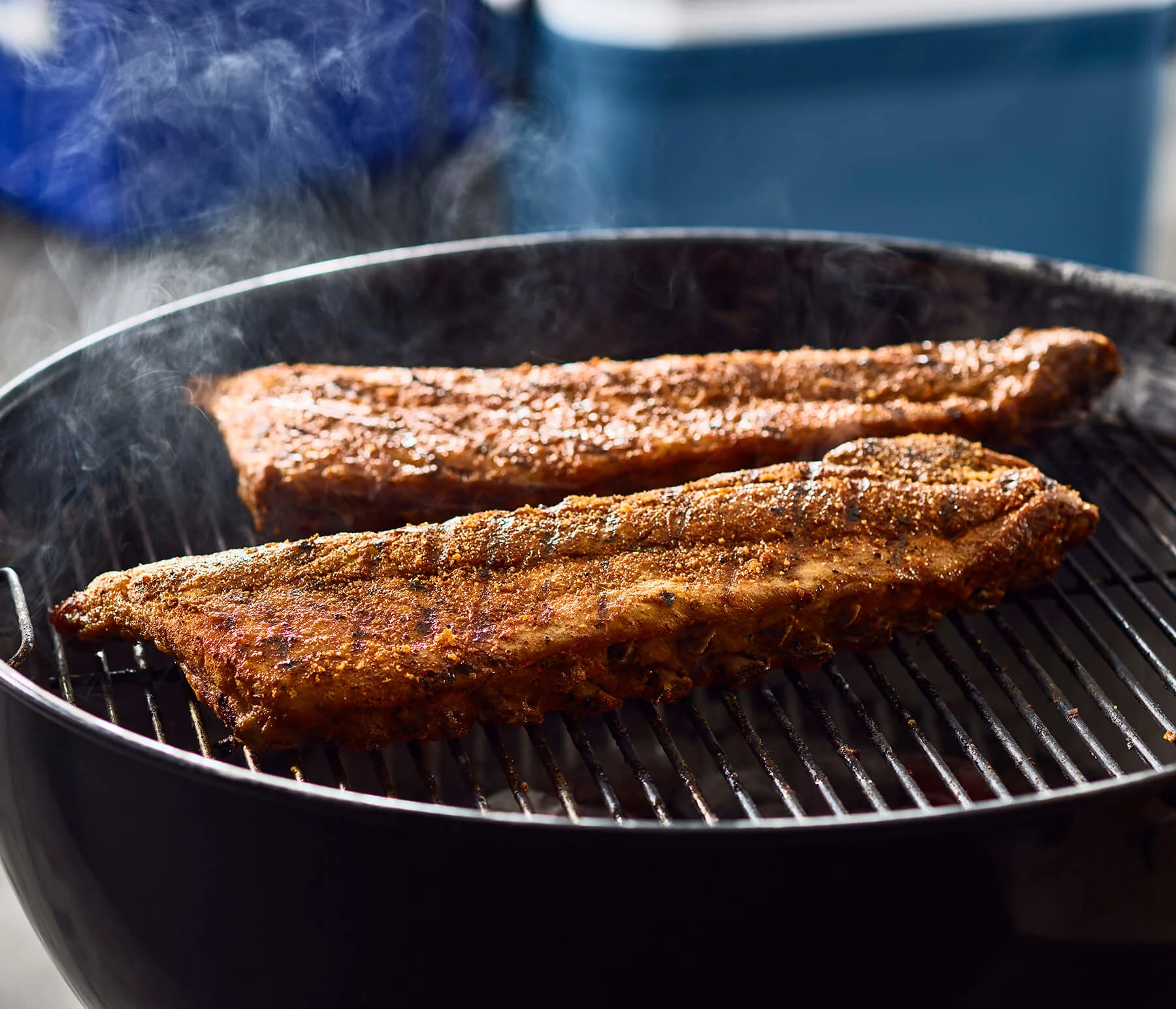
Smoke at 225 to 250°F for 4 to 5 hours.
Baste or mop the ribs occasionally, but don’t open the grill too often.
Maintaining a steady temperature is important. Opening the grill causes wide temperature changes.
If you are using a sugar/tomato-based glaze or sauce, apply during the last half-hour to prevent the glaze/sauce from burning onto the ribs.
The Finish
The Finish
It’s time to check for doneness. There are 3 simple ways to tell:
- 1. As the meat cooks, it shrinks and exposes the bone at the thinner end of the rib. When about ¼” of bone is exposed, the smoked ribs should be done.
- 2. When you pick up the middle of the slab and flex it, the meat will separate from the bone and not flex back (if it feels rubbery, it’s not done).
- 3. Cut a rib off and take a bite. The meat should pull off the bone with a slight tug but not fall off the bone.
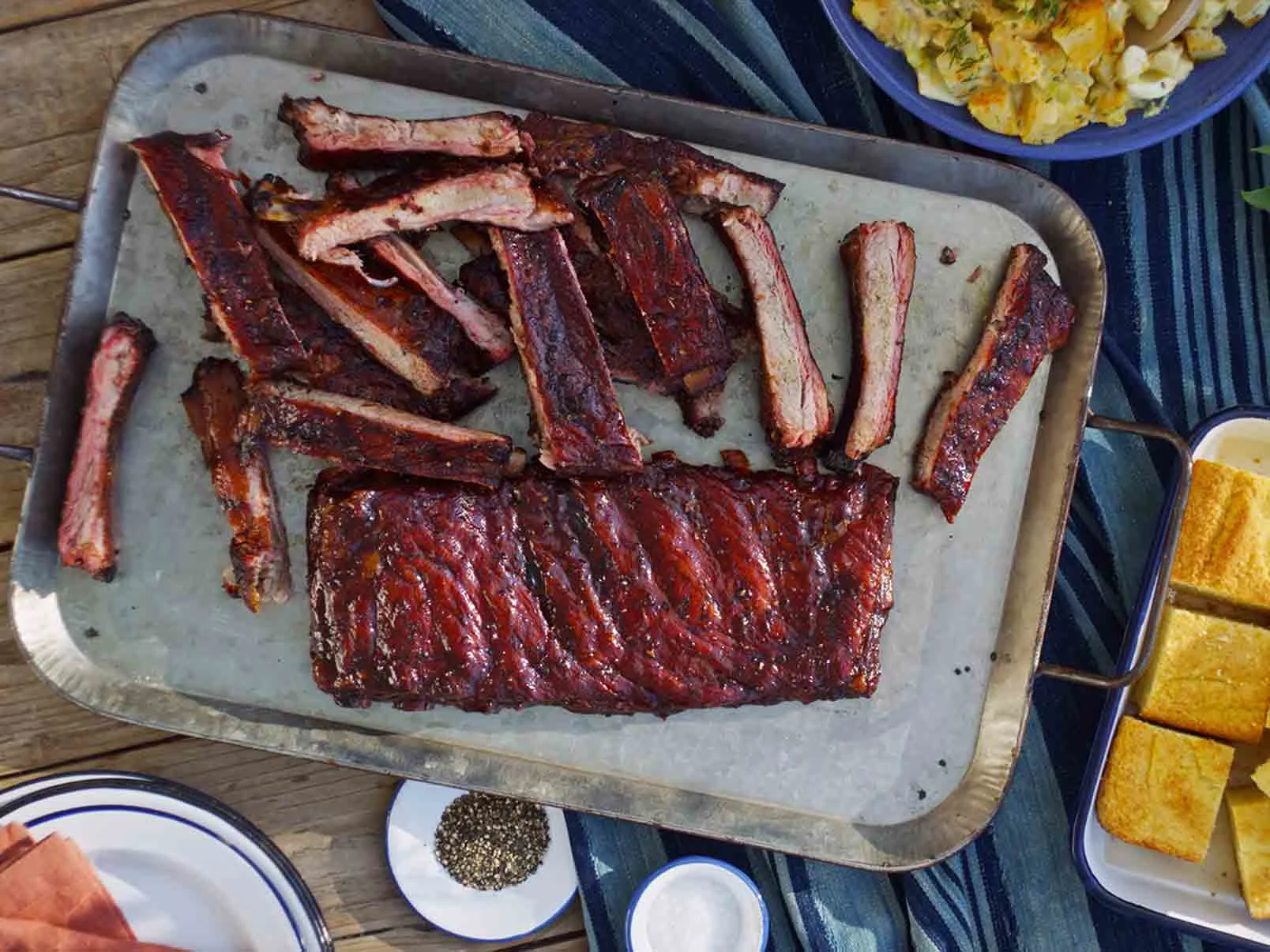
When it’s time for the ribs to come off the grill, let them rest and cool down for about 15 minutes before handling and slicing.
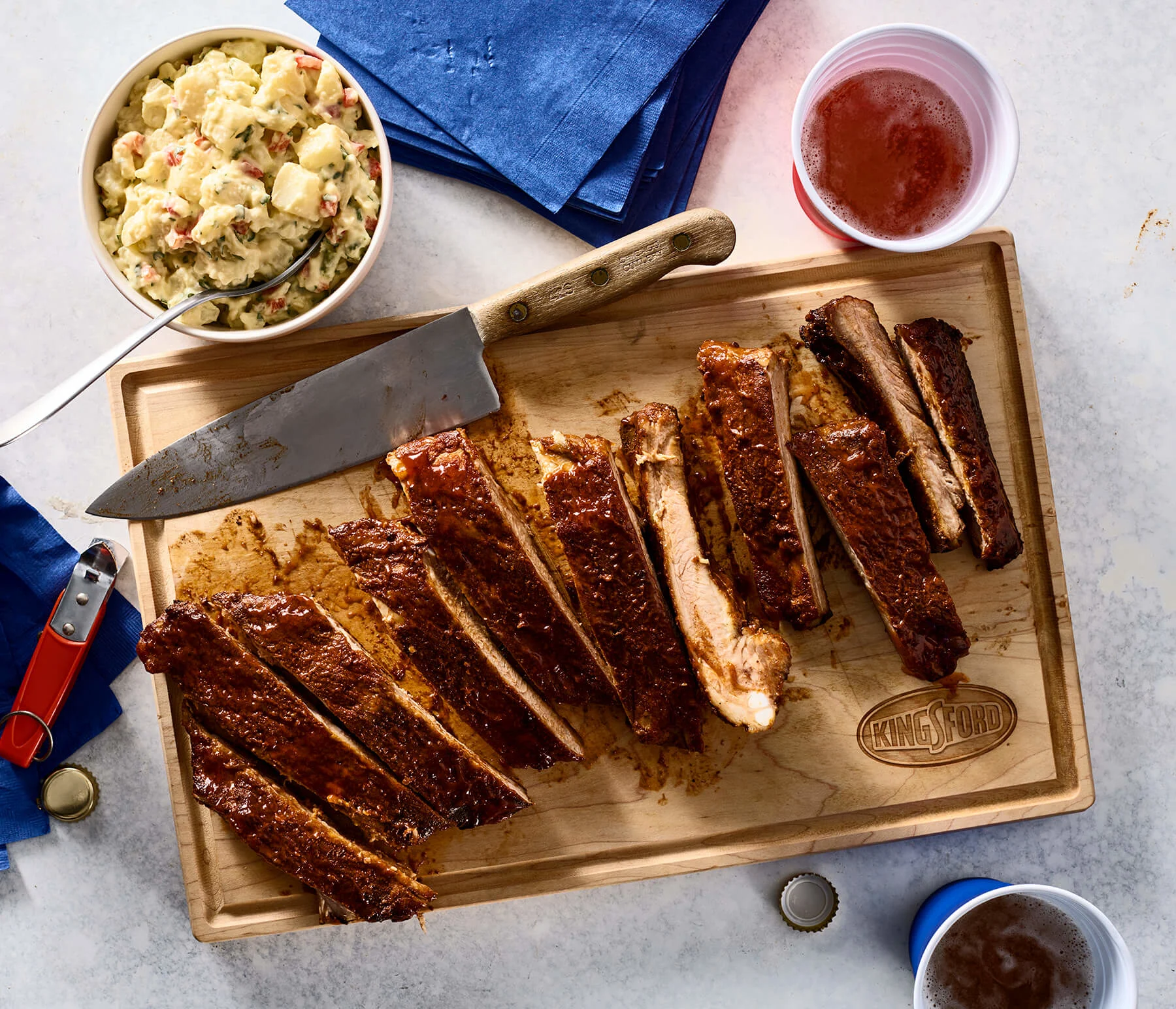
To slice the ribs, cut between the bones using a sharp knife.
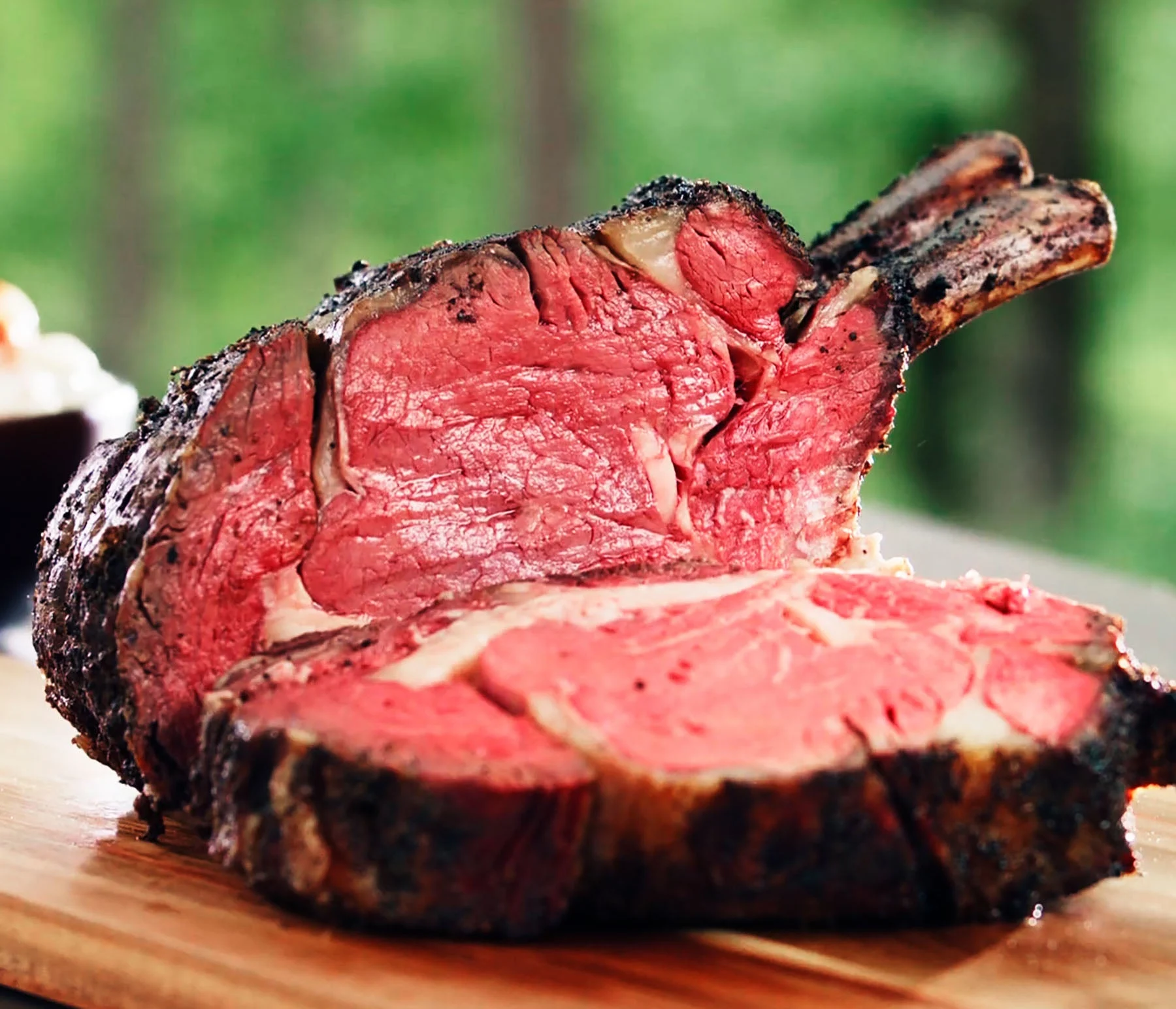
Notice the smoke rings around the outer edges of the ribs. Don’t mistake this pink meat for being underdone ─ this is the signature of perfectly smoked BBQ pork ribs. Enjoy!
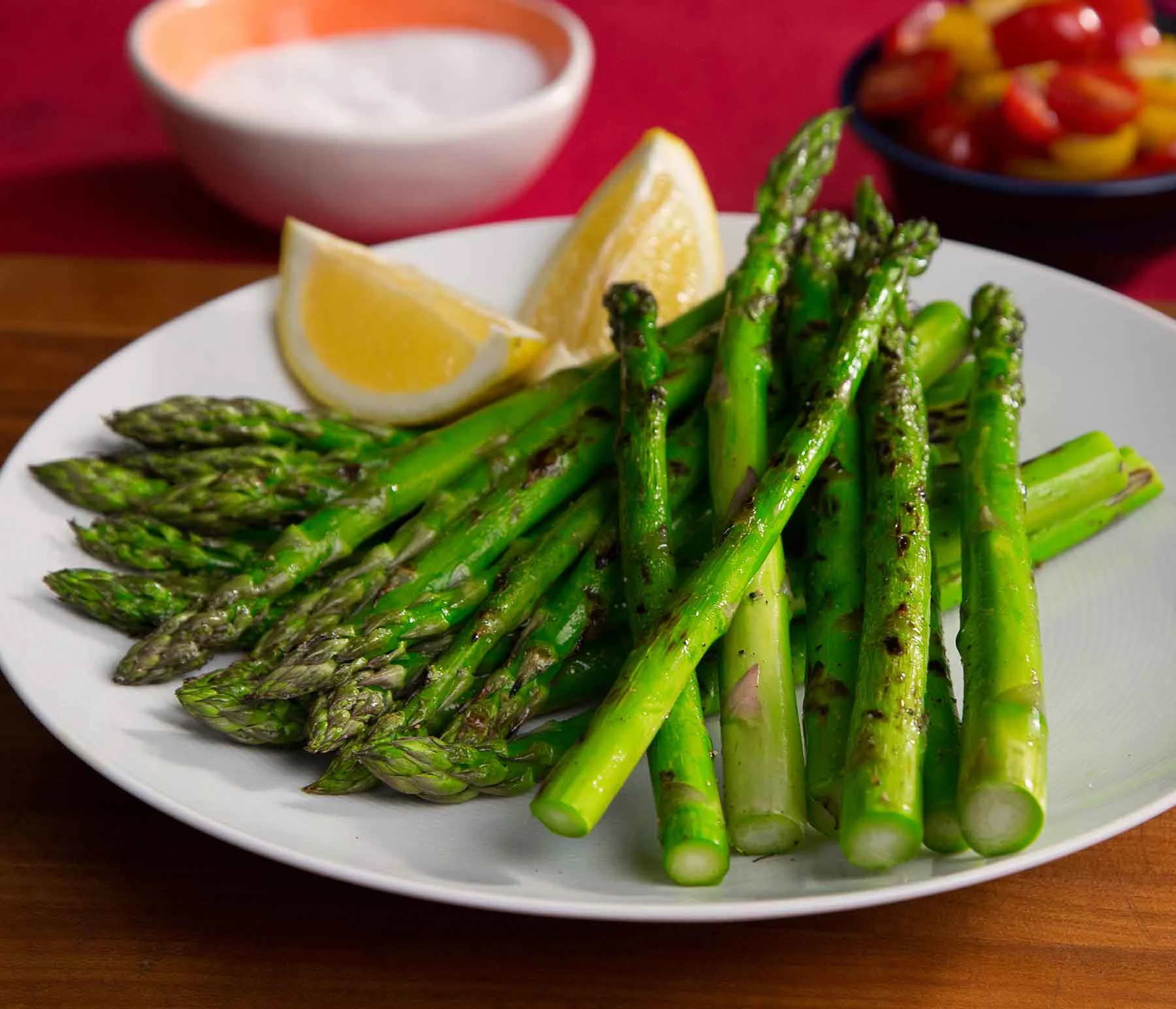
- Cornbread
- Coleslaw
- Baked beans
- Potato salad
- Mac & cheese
If you have cooked pork ribs, let them cool to room temperature (never longer than 2 hours) before refrigerating. Store them in an airtight container or wrap them tightly in aluminum foil or plastic wrap. Cooked pork ribs can last in the refrigerator for 3-4 days.
Cooked pork ribs can also be frozen for longer storage. Wrap them tightly in aluminum foil or place them in a freezer-safe container. Properly frozen cooked pork ribs can maintain quality for 2-3 months in the freezer. Remember to label your packages with the date so you can keep track of how long they've been stored.
For more information on food storage, consult the links below:
Reheating Cooked Pork Ribs from Refrigeration:
- Oven: Preheat your oven to around 250-300°F. Wrap the ribs in aluminum foil to prevent drying out and place them on a baking sheet. Reheat for about 20-30 minutes or until heated through.
- Grill: Preheat your grill to medium heat. Place the ribs on the grill and heat them for 10-15 minutes, turning occasionally and basting with barbecue sauce if desired.
- Microwave: This method is quick but can result in uneven heating. Place the ribs on a microwave-safe plate, cover with a damp paper towel, and microwave on medium power in 1-minute intervals until heated through.
- Oven: Preheat your oven to around 250-300°F. Wrap the frozen ribs in aluminum foil and place them on a baking sheet. Reheat for about 1-1.5 hours or until heated through, flipping halfway through.
- Grill: Thaw the ribs in the refrigerator overnight if possible. Preheat your grill to medium heat. Place the ribs on the grill and heat them for 15-20 minutes, turning occasionally and basting with barbecue sauce if desired.
- Microwave (not recommended for frozen ribs): If you're in a hurry, you can use the microwave, but it may result in uneven heating and a less desirable texture compared to other methods. Follow the microwave instructions for reheating from refrigeration, but expect longer heating times.
Regardless of the method you choose, always ensure that the pork ribs are heated to an internal temperature of at least 165°F for food safety.
How to Serve Pork Ribs:
Suggested Pairings:
How to Store Pork Ribs:
How to Reheat Pork Ribs:
Reheating Frozen Cooked Pork Ribs:
Frequently Asked Questions
Enable cookies to see recommended recipes
Grilling 101
HOW TO GRILL WITH CHARCOAL
Need the fundamentals? Learn how to get started with charcoal, pellets or our signature flavors.
Enable cookies to view social media content.


